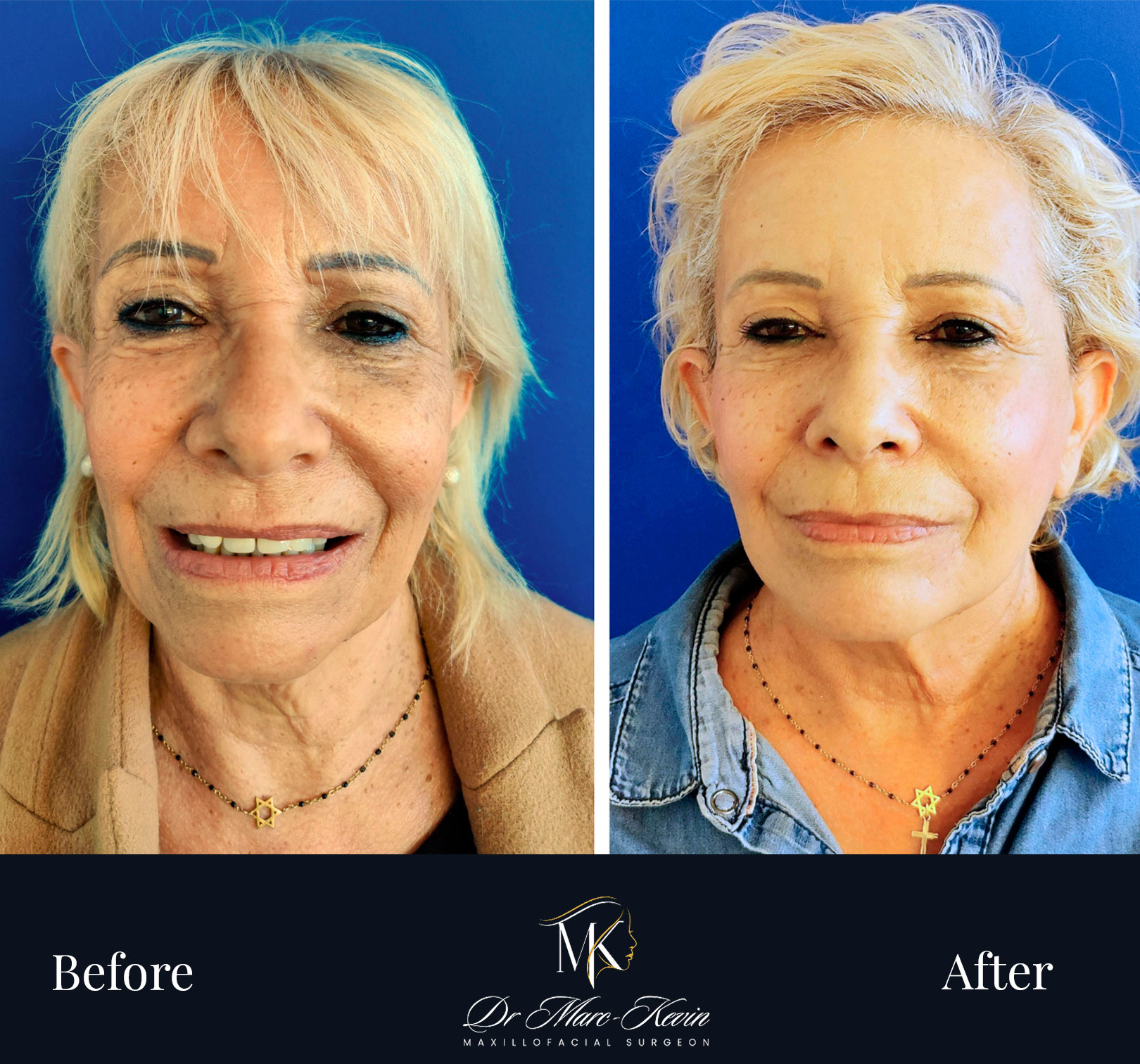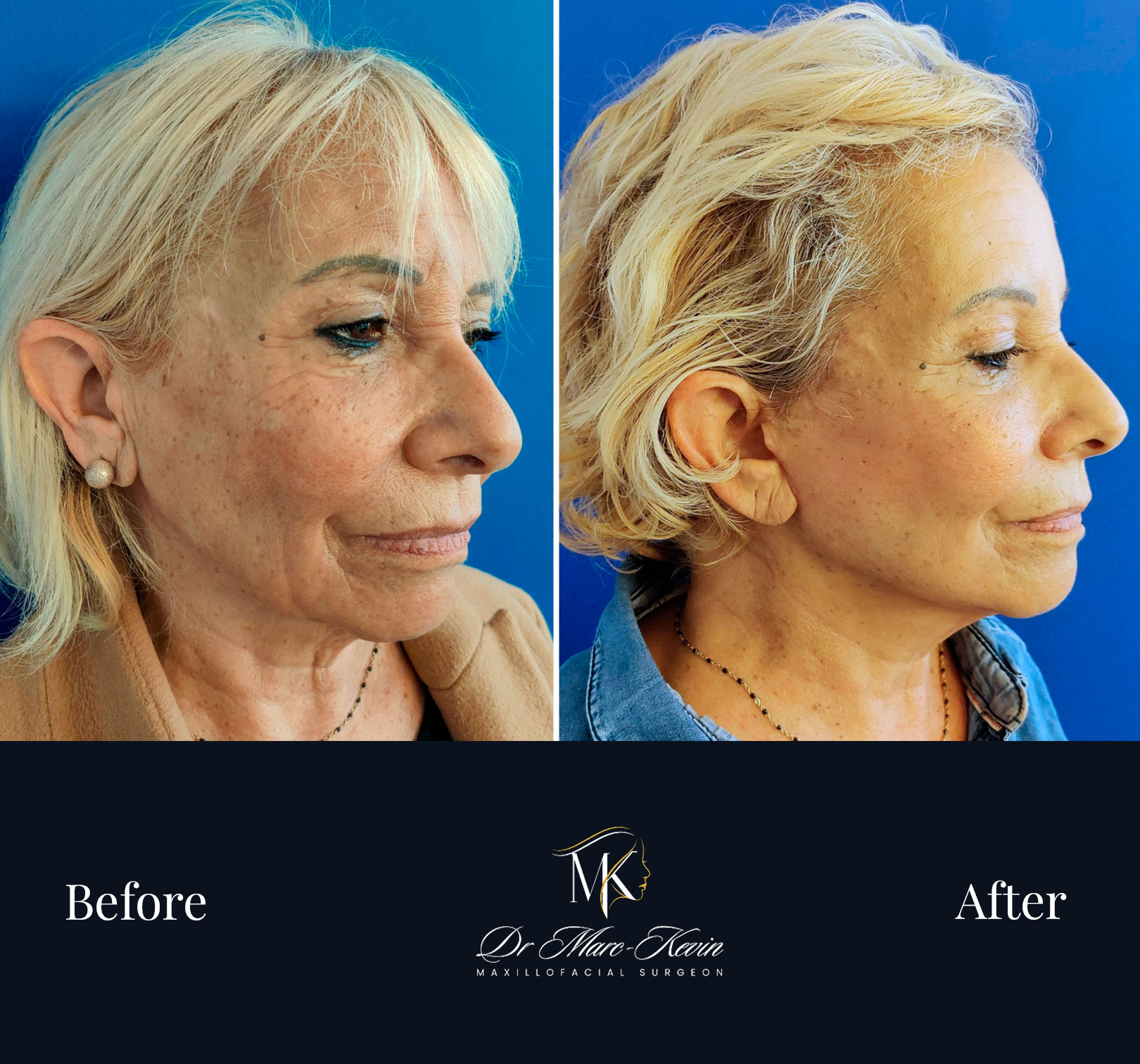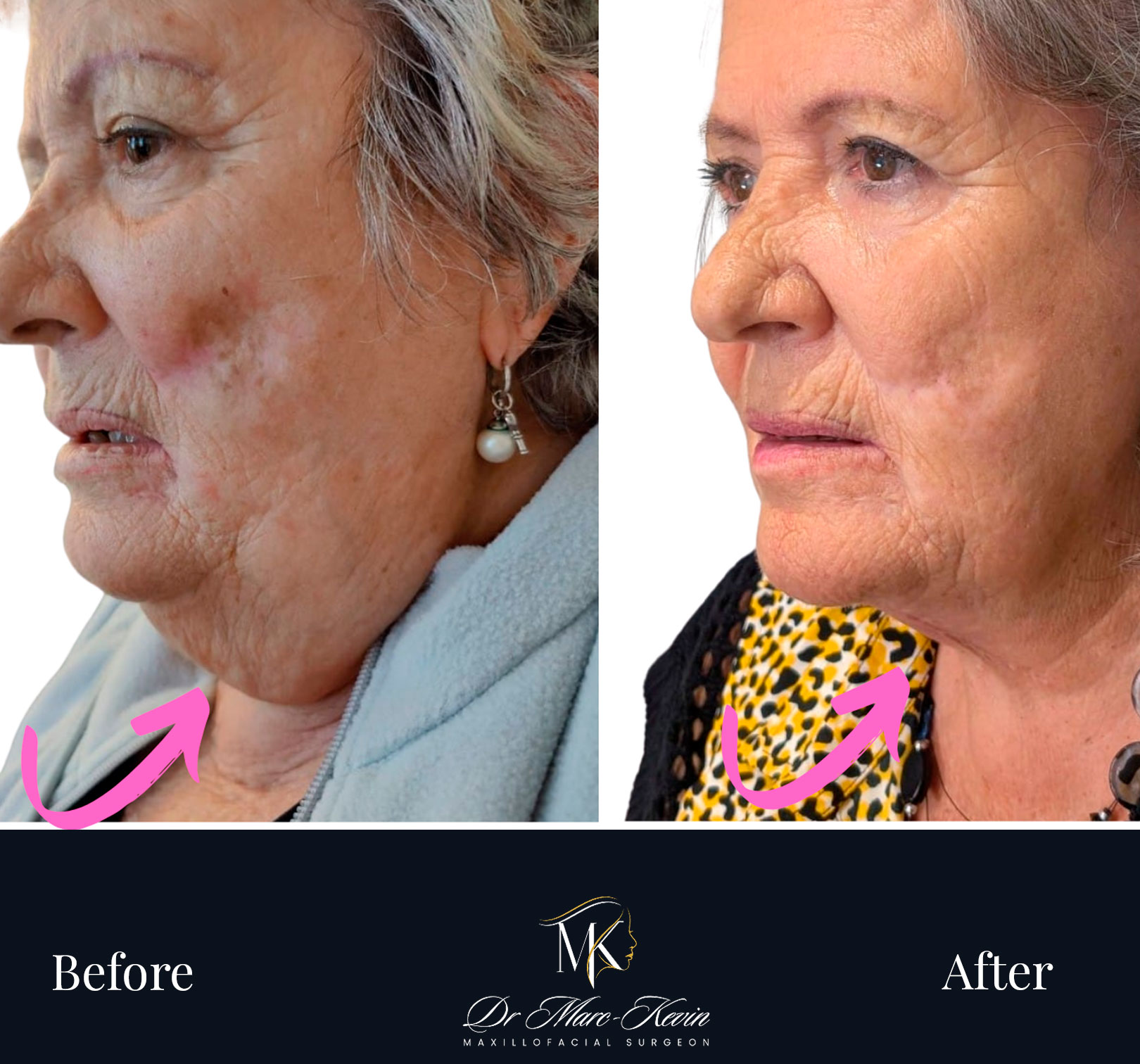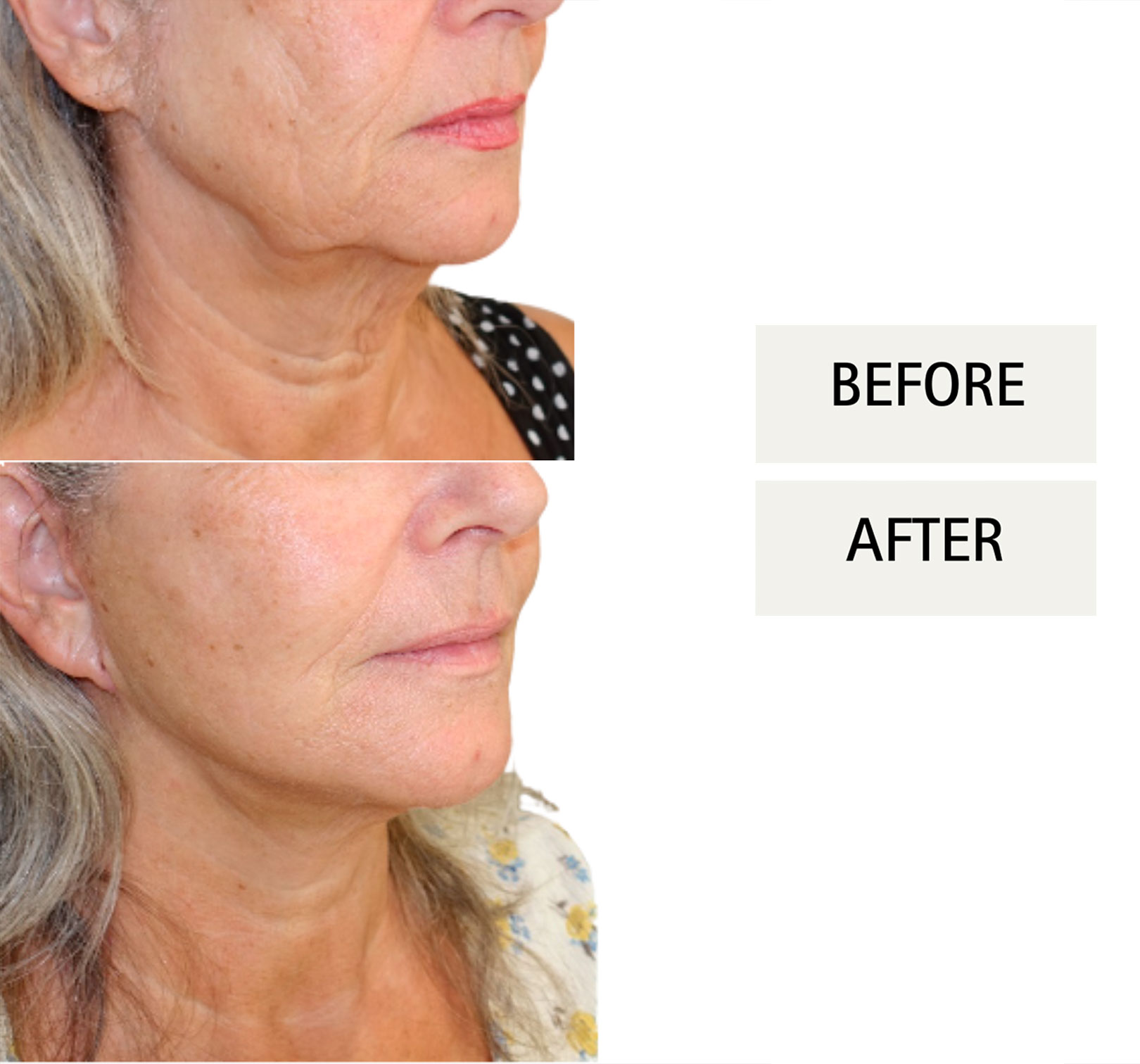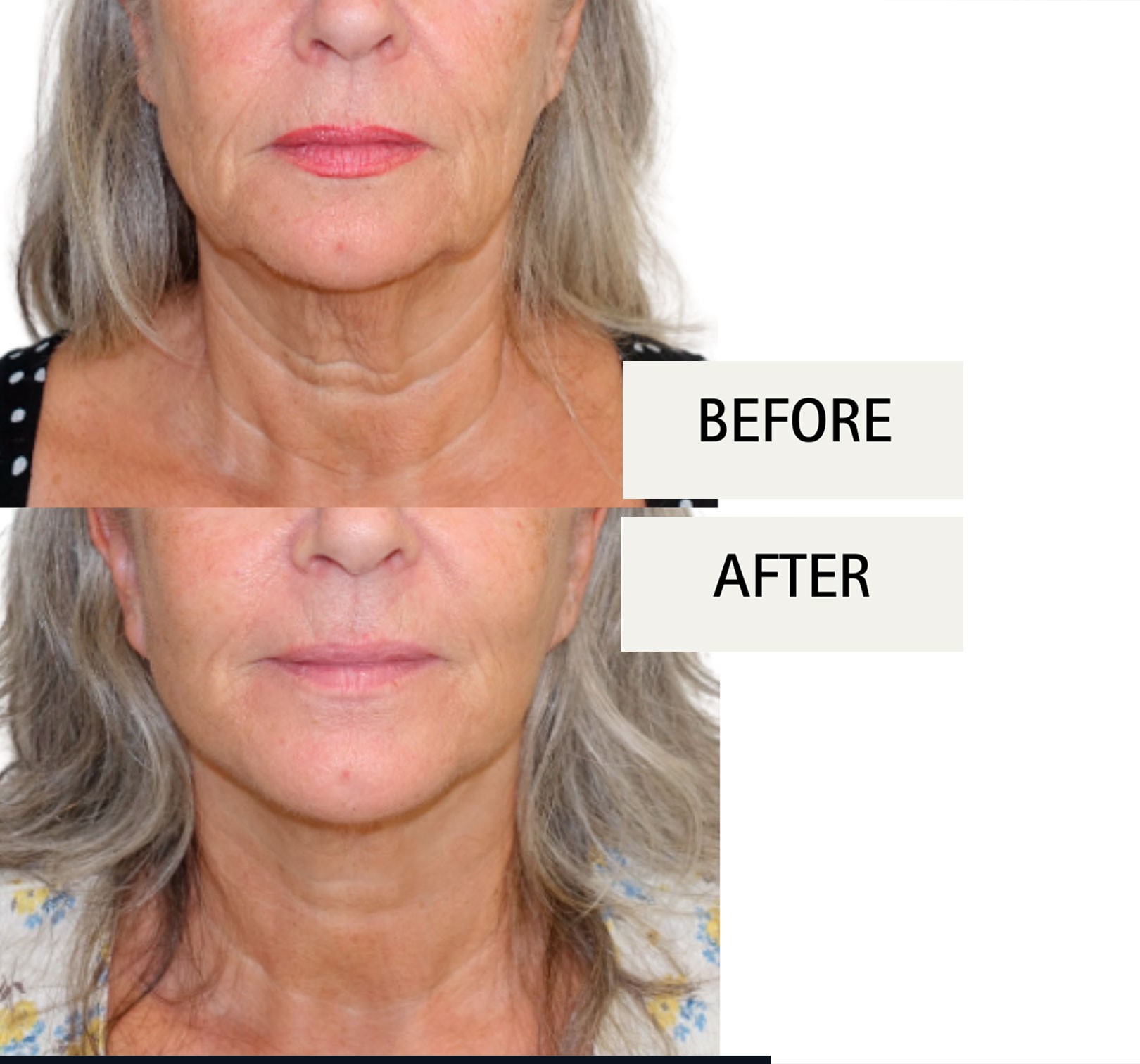
Facelift & Neck Lift in Dubai
Ageing changes the face from the support layers outward: ligaments loosen, fat pads descend, and skin loses elasticity. The jawline softens, jowls appear, and the neck can look heavy or banded. My philosophy is simple: restore structure, respect character. I perform deep-plane facelifts when they are the right answer—and less-invasive lifts when lighter correction and quicker recovery suit your goals.
Why choose Dr Marc-Kevin Le Roux
- Maxillofacial precision: deep knowledge of SMAS/platysma, retaining ligaments and skeletal support.
- Natural aesthetic: refreshed contours without over-tightening or over-filling.
- Tailored pathway: from mini-lift to full deep-plane/neck lift, selected to match your anatomy, timeline and preferences.
- Operating-theatre only: procedures are performed in a clinical OR under sedation or general anaesthesia for maximal safety.
What a facelift actually treats
A modern facelift addresses the lower face and jawline (jowls, marionette lines, blurred oval) and often the neck. Rather than simply tightening skin, the surgery repositions the support layer (SMAS/platysma), then redrapes skin without tension. Incisions are concealed around the ear and within the hairline; a small crease incision under the chin may be used for neck work.
My planning framework: 4-Layer Facial Mapping
Every plan maps four layers —
1. Skin (quality/elasticity)
2. Fat (volume/compartments)
3. SMAS/Platysma (vector/fixation)
4. Skeletal support (chin/jaw projection)
Treating the right layer avoids “pulled skin” results and keeps expressions natural for a result that will persist for decades.
Deep-Plane Facelift (the signature option)
Why patients choose it.
- Natural, long-lasting contour change (structure reset rather than skin pull)
- Superior correction for jowls, midface descent, and deep folds
- Soft-tissue repositioning preserves facial identity and avoids a “wind-tunnel” look
What to expect.
- Anaesthesia: sedation or general, day-case in most patients
- Recovery: swelling/bruise peak days 3–5; most social downtime ~2 weeks (individual variation)
- Scars: concealed around ear/hairline; meticulous closure and scar care protocols provided
Is deep-plane always the best? Not by default. I recommend deep-plane when laxity and descent dominate and you want a one-and-done, durable correction. If your priority is lighter change with faster downtime, a mini-lift/SMAS approach can be the smarter choice.
Less-Invasive Lift Options
Mini-Lift (Short-Scar, SMAS plication/imbrication)
Ideal for early to moderate laxity focused at the jawline. Shorter incisions, quicker recovery, targeted SMAS tightening.
Neck Lift (with or without facelift)
For banding or fullness under the chin:
- Liposuction for subcutaneous fat
- Platysmaplasty to refine bands and neck contour
- Subplatysmal fat addressing in selected cases
Goal: a clean cervico-mental angle and a lighter, longer neck.
Combination procedures (case-by-case)
(upper/lower eyelids) to brighten the gaze
to restore subtle midface or temple volume
when skeletal support is limited
These are planned only if they add clear value to your result.
FAQs
Results & longevity
You should look rested, defined and yourself—not different. Well-executed lifts maintain visible benefit for many years (often 8–12+ depending on genetics, skin care, sun exposure and lifestyle). Ageing continues; surgery resets the clock rather than pauses it.
Consultation & preparation
- Assessment: photos and 4-Layer Mapping™ of skin, fat, SMAS/platysma, and bone support
- Medical work-up: standard labs; cardiology if indicated (often >50 or risk factors)
- Stop smoking: ≥4 weeks before and after (critical for healing)
- Medications: avoid aspirin/NSAIDs and certain supplements ~10 days pre-op unless advised
- Anaesthesia & setting: sedation or general in operating theatre only
Recovery choreography (typical)
- Days 0–2: head elevation, cold compresses, short walks
- Days 3–7: swelling/bruise peak then recede; light activities
- Days 7–10: suture removal as indicated; makeup to camouflage
- Week 2: most patients resume work/social life
- Weeks 6–12: tissue settling; scar maturation over months with care
Individual recovery varies; you receive a personalised protocol and direct aftercare guidance.
Risks & safety (summary)
All surgery carries risks: bleeding, infection, delayed healing, asymmetry, numbness/altered sensation, skin/hairline changes, and—rare with meticulous technique—nerve injury. Smoking markedly increases wound issues. We discuss personalised risk and mitigation in your consultation.
Deep-plane vs. mini-lift: which is right for me?
If laxity and midface descent dominate and you want the most durable, structural change, deep-plane is usually superior. If your concern is early jawline softening with a need for quicker downtime, a mini-lift/SMAS solution may be ideal.
Will I still look like myself?
Yes. Repositioning support layers (rather than pulling skin) preserves your expression and facial identity.
What scars should I expect?
Carefully placed around the ear and hairline; a small submental crease incision may be used for neck work. With care, scars fade progressively.
When can I exercise?
Light walking from day 1; avoid strenuous activity and elevated blood pressure for ~2–3 weeks or as advised.
Can eyelid surgery or fat transfer be done together?
Yes, when it meaningfully improves harmony—planned conservatively to avoid over-treating.
Book a consultation
Let’s map your anatomy and goals, then choose the deep-plane or less-invasive lift that serves you best—on your timeline.
Results