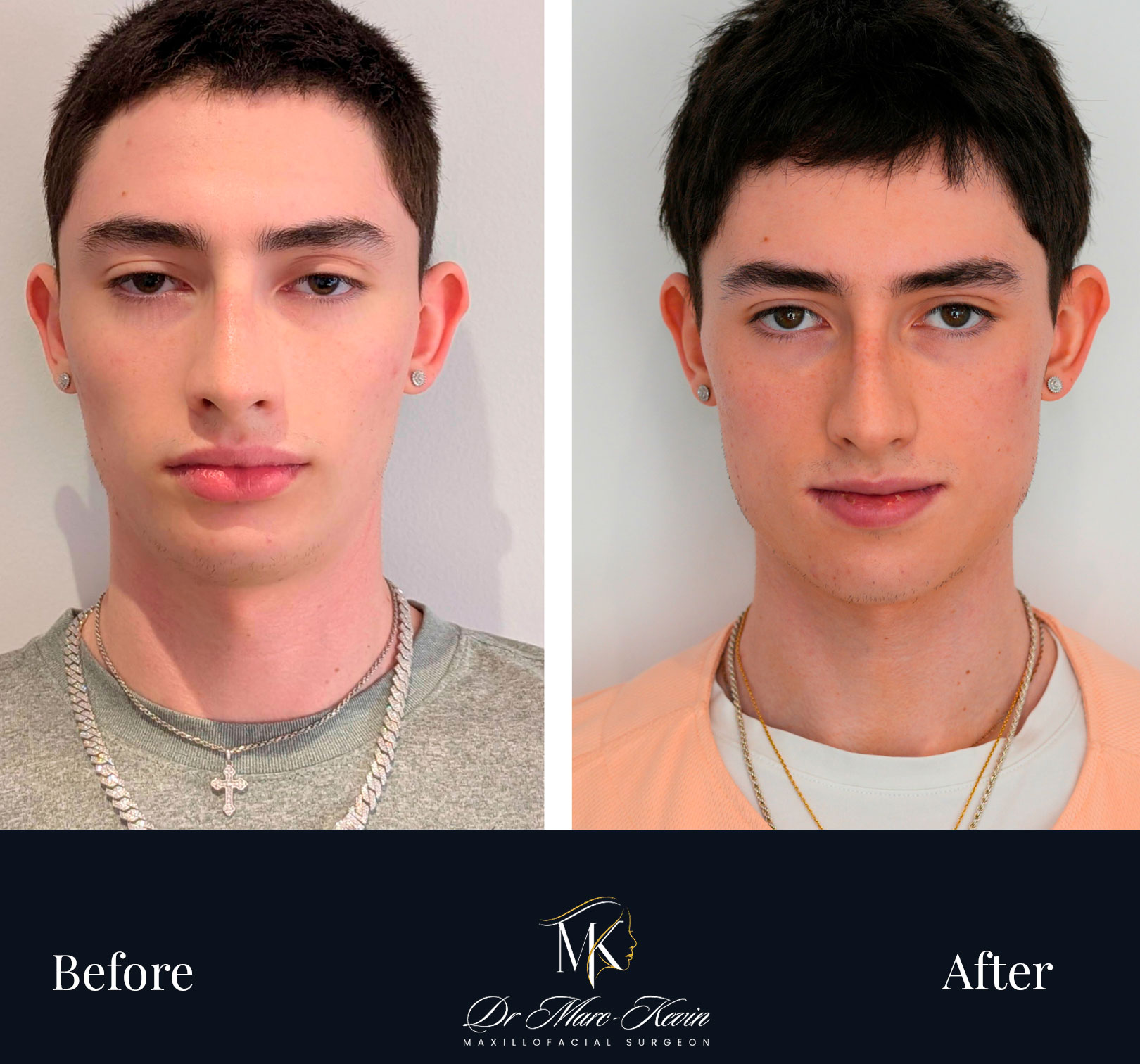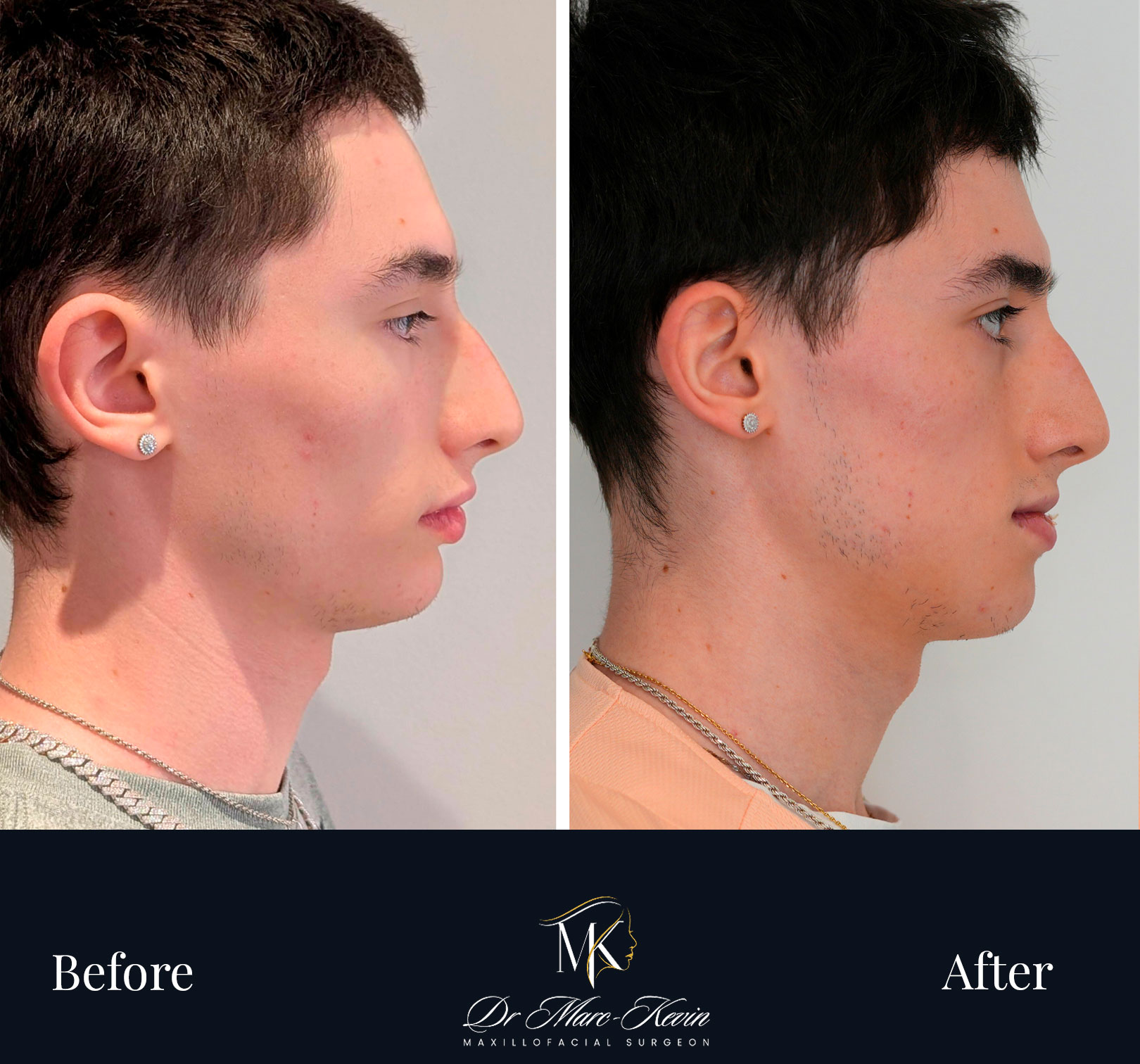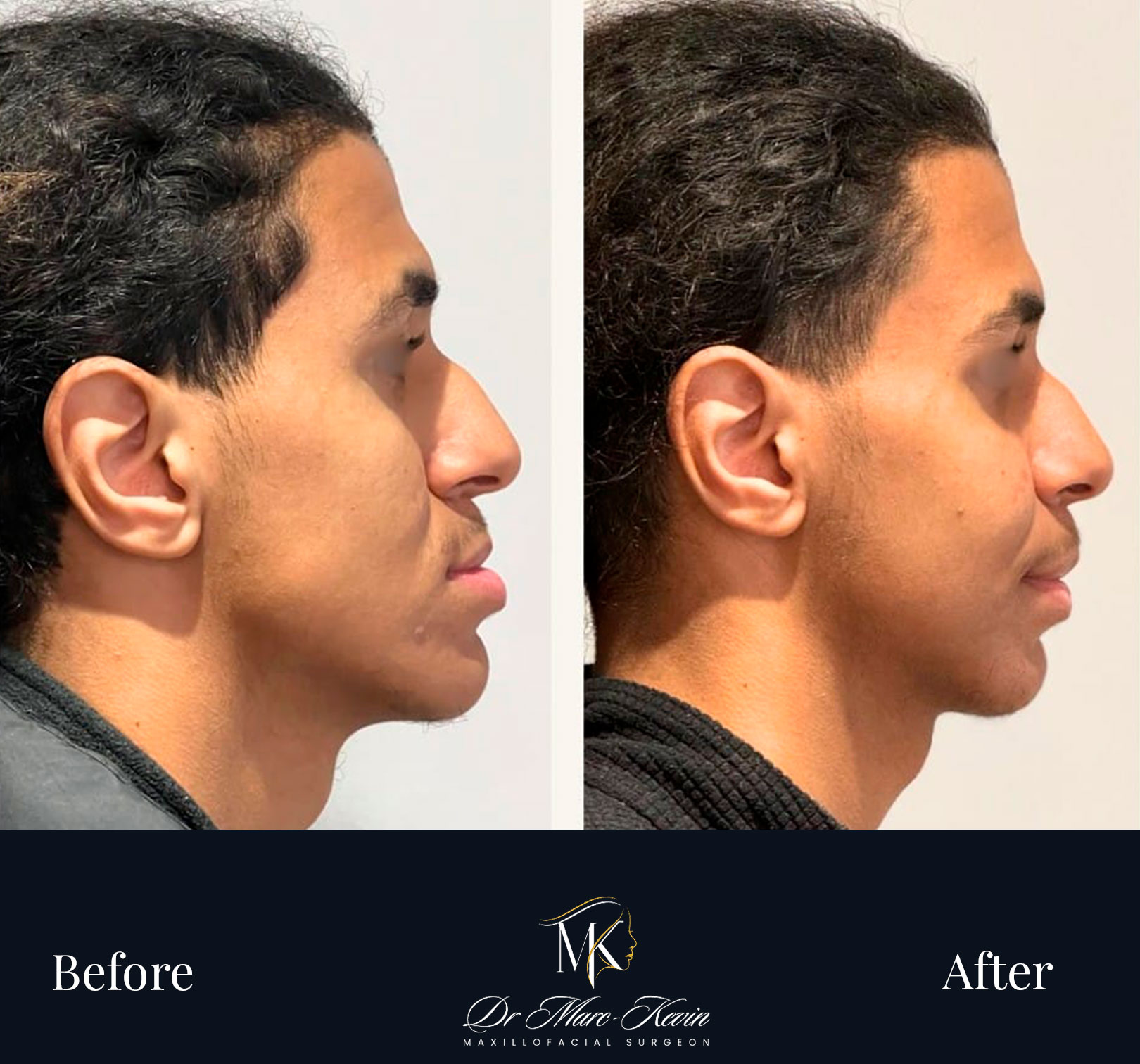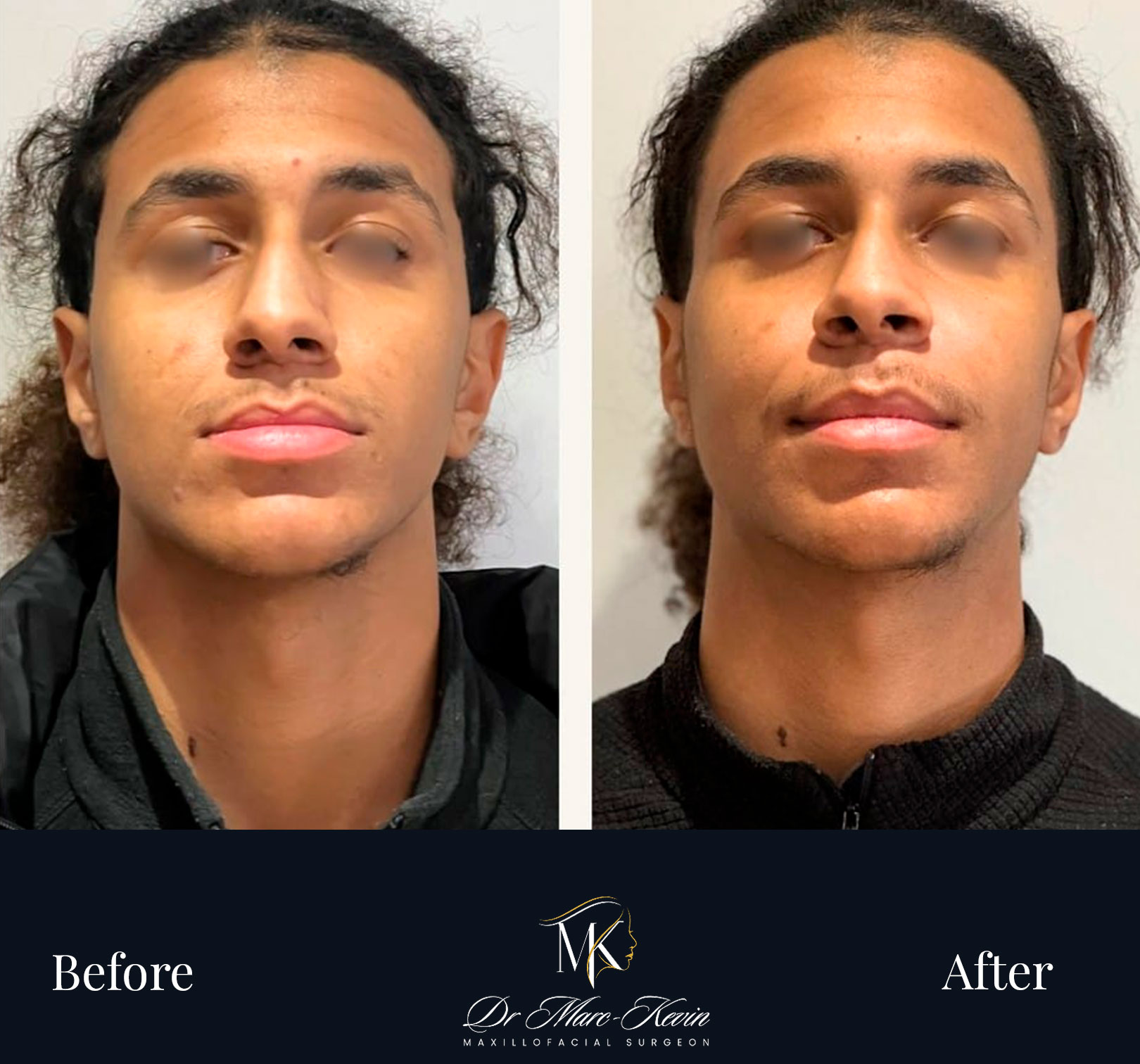
Double Jaw Surgery (Orthognathic)
Double jaw surgery repositions the upper jaw (maxilla) and lower jaw (mandible) to correct bite discrepancies, open the airway in selected cases, and restore natural facial balance—without visible external scars. Planned in 3D and performed in coordination with your orthodontist, it improves chewing, speech, breathing and aesthetics with stable, long-term results.
What double jaw surgery can (and can’t) do
Can help with:
- Class II/III malocclusion, open bite, deep bite, crossbites
- Facial asymmetry, chin–lip imbalance, gummy smile from vertical excess
- Airway improvement in selected obstructive sleep apnoea (OSA) candidates
- Dysfunction from jaw misalignment (chewing, speech, lip competence)
Cannot replace:
- Skin tightening or fat reduction (see Facelift & Neck Lift, Submental contouring)
- TMJ disorders driven purely by soft-tissue/arthritic pathology (see TMJ Disorders & Clenching)
Indications (who is it for?)
- Congenital or acquired jaw growth discrepancies affecting bite and facial harmony
- Prognathism (lower jaw too far forward) or retrogenia/retrognathism (chin/jaw too far back)
- Vertical maxillary excess (gummy smile) or deficiency
- Transverse deficiency of the upper jaw (narrow palate)
- Asymmetry with functional or aesthetic impact
- OSA candidates for maxillo-mandibular advancement (multidisciplinary selection)
Treatment is timed after growth completion; exact timing is personalised.
Le Fort I Maxillary Osteotomy (Upper Jaw)
What it improves: gummy smile (vertical excess), short upper lip show, open/deep bite, maxillary retrusion/protrusion, cant/asymmetry, narrow smile arc.
How it’s done: through the mouth, the upper jaw is mobilised and repositioned in 3D—advanced, impacted (moved upward), lowered (rare), and/or rotated (yaw/roll). When dental arches need fine alignment, a segmental Le Fort I (two- or three-piece) allows width/arch form adjustments and anterior open-bite closure.
Key refinements for natural looks:
- Counter-clockwise (CCW) rotation of the jaw complex (when indicated) to enhance jawline definition and cervico-mental angle.
- Alar base cinch and V-Y closure inside the upper lip to control nasal base width and maintain upper-lip support after impaction.
- Smile arc harmonised to the teeth and lips.
What you’ll notice: more balanced midface support, improved tooth show on smiling, and a smoother, more proportional profile.
Adjuncts & Finishing Moves (Case-by-case)
Genioplasty (Chin Surgery): internal approach to advance, set back, lengthen/shorten, or centre the chin; refines profile, improves lip competence and the mentolabial angle.
- Septoplasty/Turbinoplasty: improves nasal airflow when a deviated septum or enlarged turbinates limit breathing—valuable in airway-focused plans.
- Occlusal/Splint strategy: custom intermediate/final surgical splints guide the bite during surgery; elastics fine-tune intercuspation post-op.
- Soft-tissue finesse: careful control of nasal base, upper-lip support, and chin pad to match the new skeletal framework.
- Third molars (wisdom teeth): if indicated for BSSO clearance, removal is typically planned months before surgery to aid healing and access.
Transverse Correction (Jaw Width)
When it’s needed: narrow upper jaw/arch, crossbite, dental crowding that braces alone can’t widen predictably.
Options in adults:
- Surgically Assisted Rapid Maxillary Expansion (SARPE): a brief procedure with a custom expander to widen the palate over 1–2 weeks, followed by a consolidation phase for bone to mature.
- Segmental Le Fort I widening during bimaxillary surgery when transverse change is moderate and planned.
Result: coordinated upper-lower arch width, more room for the tongue and teeth, and a broader, natural smile corridor.
Bilateral Sagittal Split Osteotomy — BSSO (Lower Jaw)
What it improves: lower jaw too far back (advancement) or forward (setback), chin–lip imbalance, asymmetry, open/deep bite contribution.
How it’s done: internal cuts along the mandible allow controlled advance/setback and fine yaw/roll adjustments; the new position is held with rigid titanium fixation.
Precision & safety notes:
- Inferior alveolar nerve–aware technique to reduce risk of altered sensation in the lower lip/chin.
- Condylar seating checks and splint-guided bite ensure joint alignment and stability.
What you’ll notice: stronger or softer lower-face projection as planned, better bite contact, and a more coherent jawline.
The procedure, step by step
- Anaesthesia and prophylaxis; intraoperative navigation/planning checks
- Intraoral osteotomies (maxilla/mandible) per 3D plan
- Repositioning and rigid fixation; verification of bite and midlines
- Elastics as needed; no external incisions
- Recovery with structured pain control, swelling protocols and early mobilisation
Hospital stay: typically 1–2 nights.
Fixation & Incisions
All incisions are intraoral (no visible external scars). Jaws are stabilised with titanium plates and screws (patient-specific plates in selected cases). Elastics may guide the new bite during the early phase—prolonged jaw wiring is rarely required.
Recovery & timeline (typical)
- Swelling: peaks days 2–3, settles over 2–3 weeks; residual refinement up to 3 months
- Diet: liquids → soft foods 2–4 weeks; advance as advised
- Breathing: nasal congestion if maxillary work; saline rinses help
- Work: desk duties ~2–3 weeks (varies by role)
- Sport: light activity after 3–4 weeks; contact/impact later, once consolidation is confirmed
- Orthodontic finishing: begins after initial bone healing
You’ll receive a written aftercare plan (nutrition, hygiene, elastics, exercises) and scheduled reviews.
Orthodontics: before and after
- Pre-surgical phase: your orthodontist aligns/levels teeth and prepares arches for the surgical occlusion (braces or aligners).
- Post-surgical phase: finishing and detailing once bones have healed.
I coordinate closely with your orthodontist from planning to retention
Candidacy & safety
Good candidates understand the orthodontic pathway, can commit to recovery, and seek functional and aesthetic improvement with durable stability.
Risks (discussed in consent): bleeding, infection, sinus issues, bite adjustment needs, temporary or permanent sensation change of lower lip/chin (inferior alveolar nerve), relapse/asymmetry, TMJ symptoms, hardware irritation, need for staged procedures. Care is taken to minimise risk with precise planning, nerve-aware technique and close follow-up.
FAQs
Will my face look different?
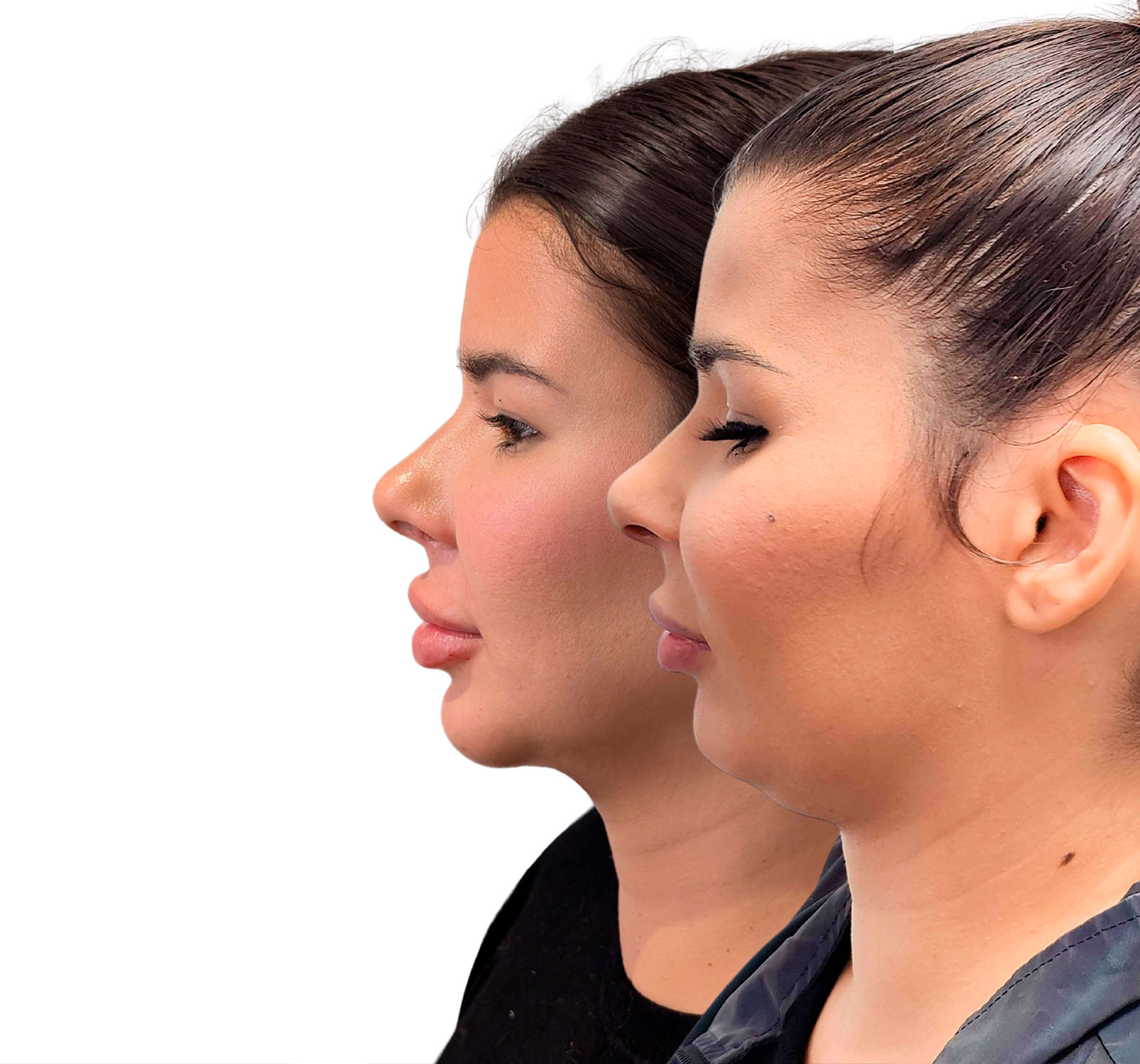
Yes—by design. Improvements to profile, ageing, smile and jawline are predictable.
Will my jaws be wired shut?
Modern rigid fixation means no prolonged wiring in most cases—elastics guide the bite while you can open gently.
Is it painful?
Discomfort and swelling are expected but well managed with multimodal analgesia and cooling. Most patients describe pressure/tightness more than sharp pain.
Can it help sleep apnoea?
In selected patients, maxillo-mandibular advancement enlarges the airway. We work with sleep specialists for diagnosis and follow-up.
Braces or aligners?
Both can work. Your orthodontist selects the system; we coordinate to ensure surgical compatibility.
Will plates need removal?
Titanium plates usually remain. Removal is uncommon and considered only for specific indications (exposure, irritation).
Results