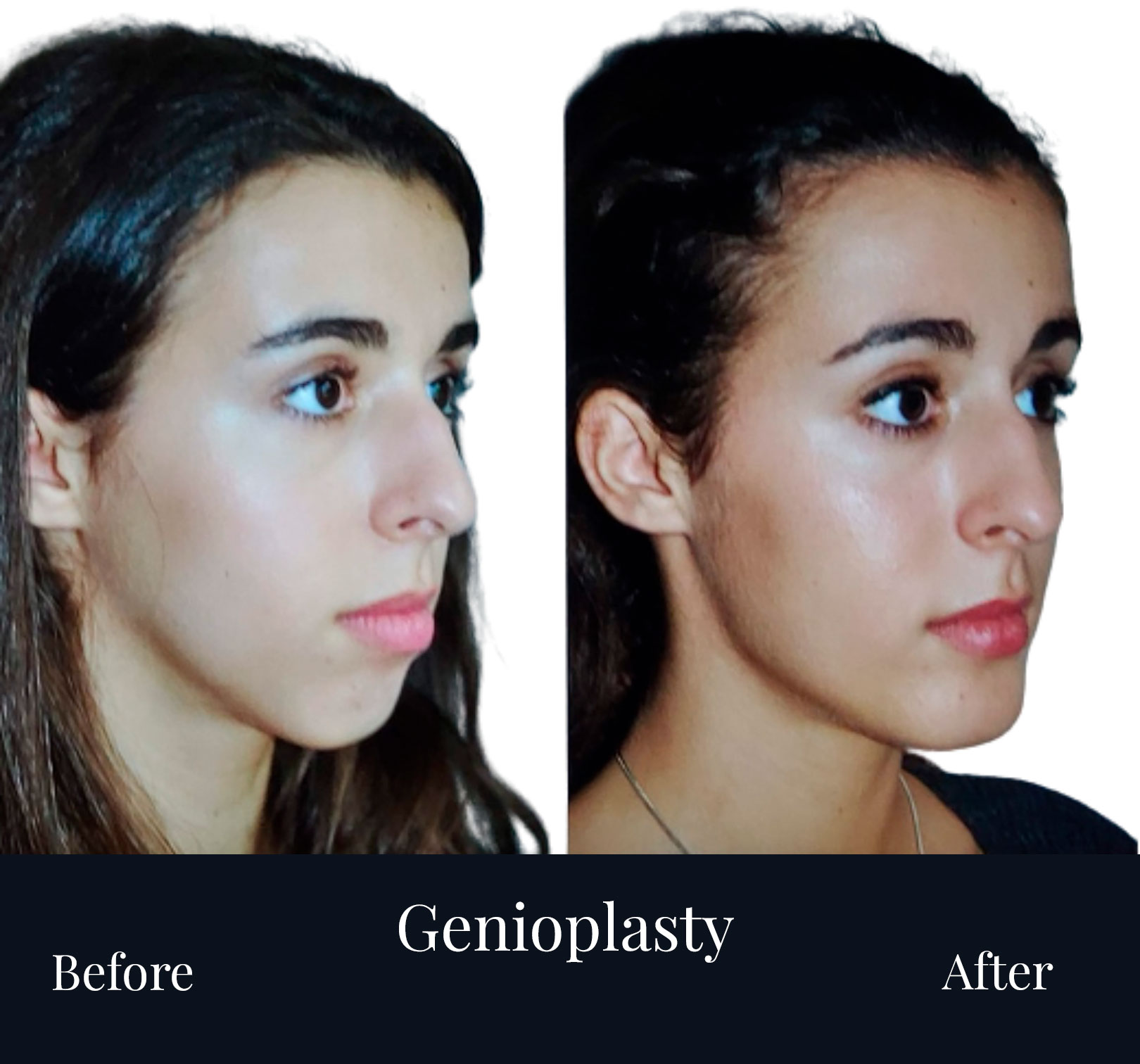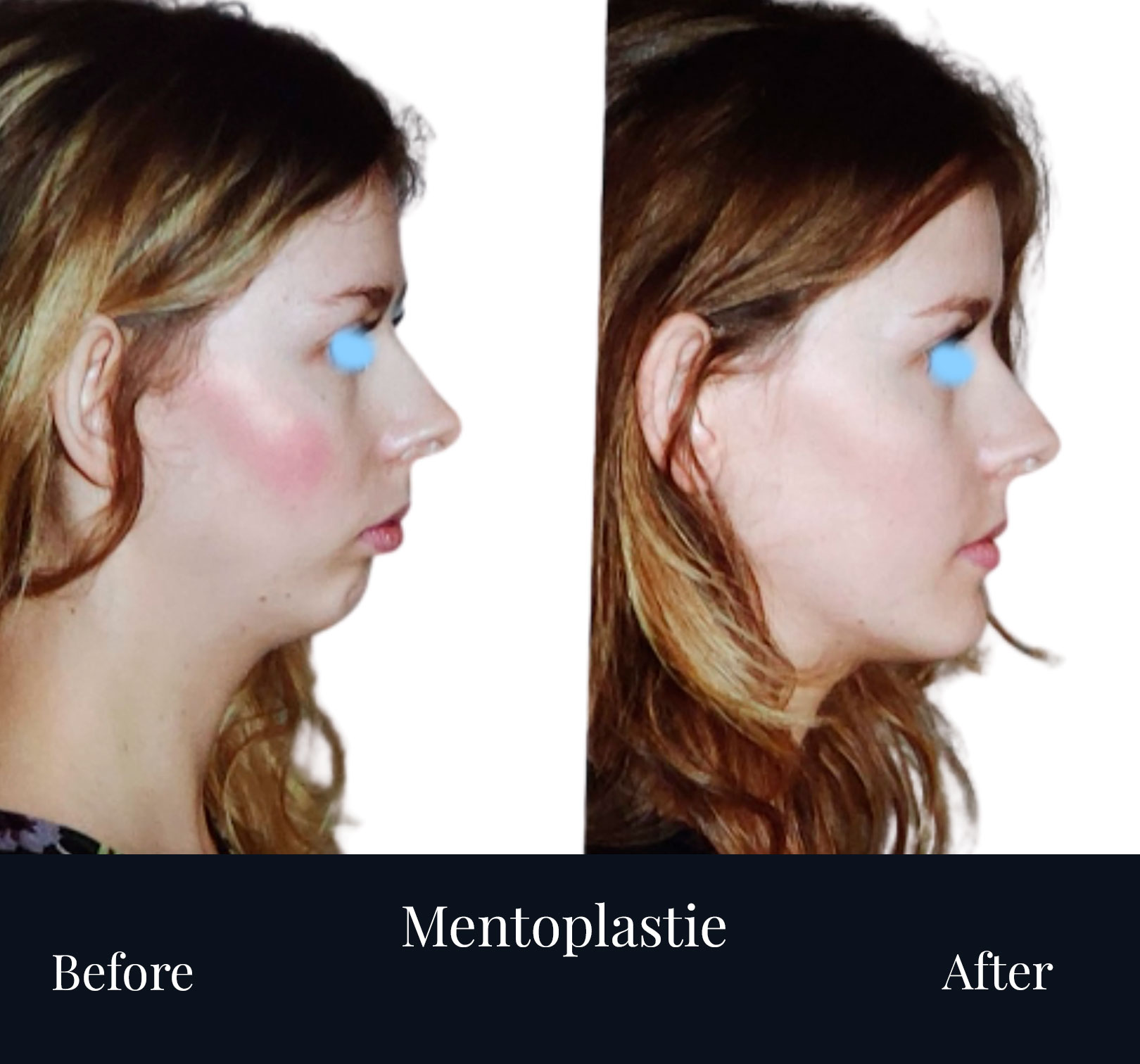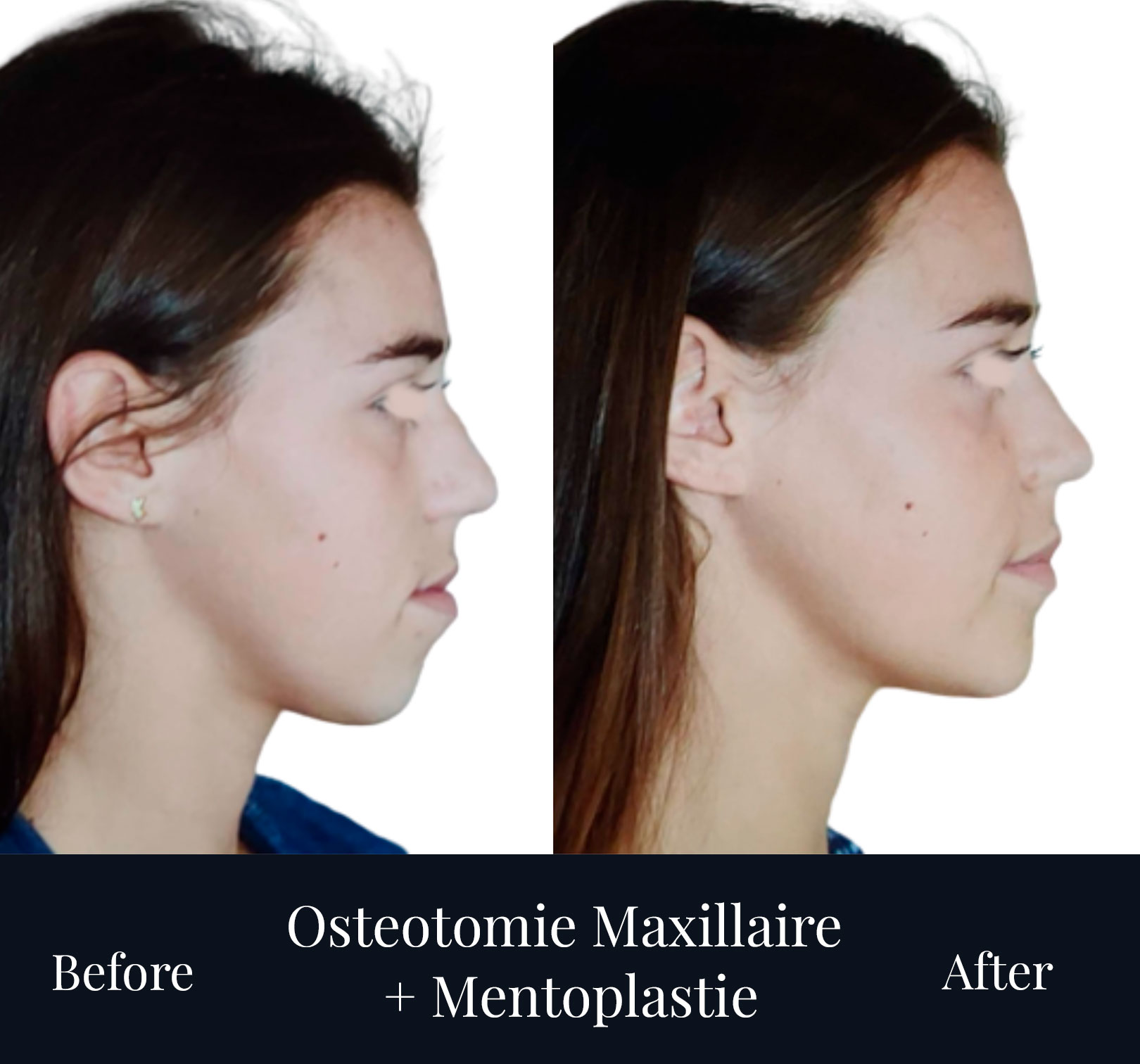
Chin Surgery (Genioplasty & Implants)
The chin anchors facial proportion. When its projection, height, or symmetry is off, the profile can look unbalanced and the lower lip may strain to close at rest. Chin surgery refines the bony chin (genial segment) to restore harmony—from subtle profile balancing to precise vertical adjustments—while keeping you recognisably you.
What chin surgery can address
- Receded (retrogenic) chin or a chin that dominates the profile
- Vertical excess or deficiency (long or short lower face)
- Asymmetry / off-centre chin point
- Deep or shallow labiomental angle, “peau d’orange”/mentalis strain
- Profile harmony when coordinating with the nose and jawline
Your options
Sliding Osseous Genioplasty (bone reshaping)
A controlled osteotomy repositions your own chin bone forward/backward, up/down, or slightly side-to-side.
- Approach: intraoral (inside the mouth) → no external scar
- Fixation: low-profile titanium plates/screws
- What it’s best for: larger or multidirectional changes; vertical height; asymmetric centring; durable, “native-bone” result
- Anaesthesia & setting: usually general or sedation in an operating theatre
Chin Implant (biocompatible implant)
A tailored implant adds projection or width when bone quality is good and changes are modest.
- Approach: often intraoral; occasionally a tiny submental incision when indicated
- What it’s best for: limited forward projection or width enhancement with a shorter procedure and reversibility
- Note: not ideal for significant vertical changes or complex asymmetry
How we choose:
If you need >3–4 mm projection, vertical change, or centring corrections, osseous genioplasty is usually superior. For smaller, straightforward projection or width refinements—and if you value reversibility—implant can be appropriate.
The procedure — step by step
- Photography & planning (profile/front/oblique), cephalometric measurements as needed
- Marking & local infiltration (even under general anaesthesia)
- Precise osteotomy with ultrasonic instruments (osseous) or subperiosteal pocket creation (implant)
- Reposition/fixation (osseous) or implant placement and stabilisation
- Closure with dissolvable intraoral sutures; external tape or small dressing as needed
Time in theatre: ~45–90 minutes depending on technique and combination procedures.
Can help with:
- Fullness in the lower cheek that obscures cheek–jaw definition
- Faces that remain round despite normal weight and healthy lifestyle
- Improving midface–jaw harmony when combined with chin/jawline work
Recovery & aftercare
- Day 0–3: head elevation, cold compresses; soft/lukewarm diet; antiseptic mouthwash
- Sensation: temporary lower-lip/chin numbness or tightness is common and usually settles
- Work/social: many return within 7–10 days (individual variation)
- Sport: light walking from day 1; avoid strenuous activity ~2–3 weeks (contact sports, ~6–8 weeks)
- Follow-up: scheduled checks; sutures are resorbable
Result timeline: visible immediately, with refinement as swelling resolves; most settle by 6–12 weeks. Bone remodelling after osseous surgery continues for months.
Results & longevity
- Osseous genioplasty: structural, permanent, and fully integrated—excellent control over projection and height.
- Implant: durable and removable if needed; may require future revision in a small minority (malposition, contour change with ageing/weight).
Risks (and how I mitigate them)
Common, typically mild: swelling, bruising, temporary numbness, incisional irritation.
Less common: infection, haematoma, plate palpability, implant malposition, prolonged altered sensation, root/nerve irritation, asymmetry or under/overcorrection. Risks are reduced by conservative planning, meticulous nerve-safe technique, sterile operating theatre, and structured aftercare.
FAQs
Will chin surgery change my smile?
It can reduce mentalis strain and smooth the chin dimpling; your smile dynamics are preserved.
Do I need braces/orthodontics?
Not usually. Chin surgery acts on the chin bone, not the dental occlusion. If bite issues exist, we discuss orthognathic options separately.
Is there a visible scar?
I use an intraoral approach whenever suitable. In select implant cases a tiny submental incision may be chosen for stability; it is discreet.
When will numbness go away?
Temporary changes in sensation are common and typically improve over weeks or months; persistent issues are uncommon with careful technique and non-smoking patients.
Combining for harmony (case-by-case)
Rhinoplasty / Liquid Rhinoplasty
Rhinoplasty / Liquid Rhinoplasty
Jawline Implants
Jawline Implants
Submental contouring
Submental contouring
Facelift & Neck Lift
Facelift & Neck Lift
Results