Jawline Botox (Slim Lower Face)
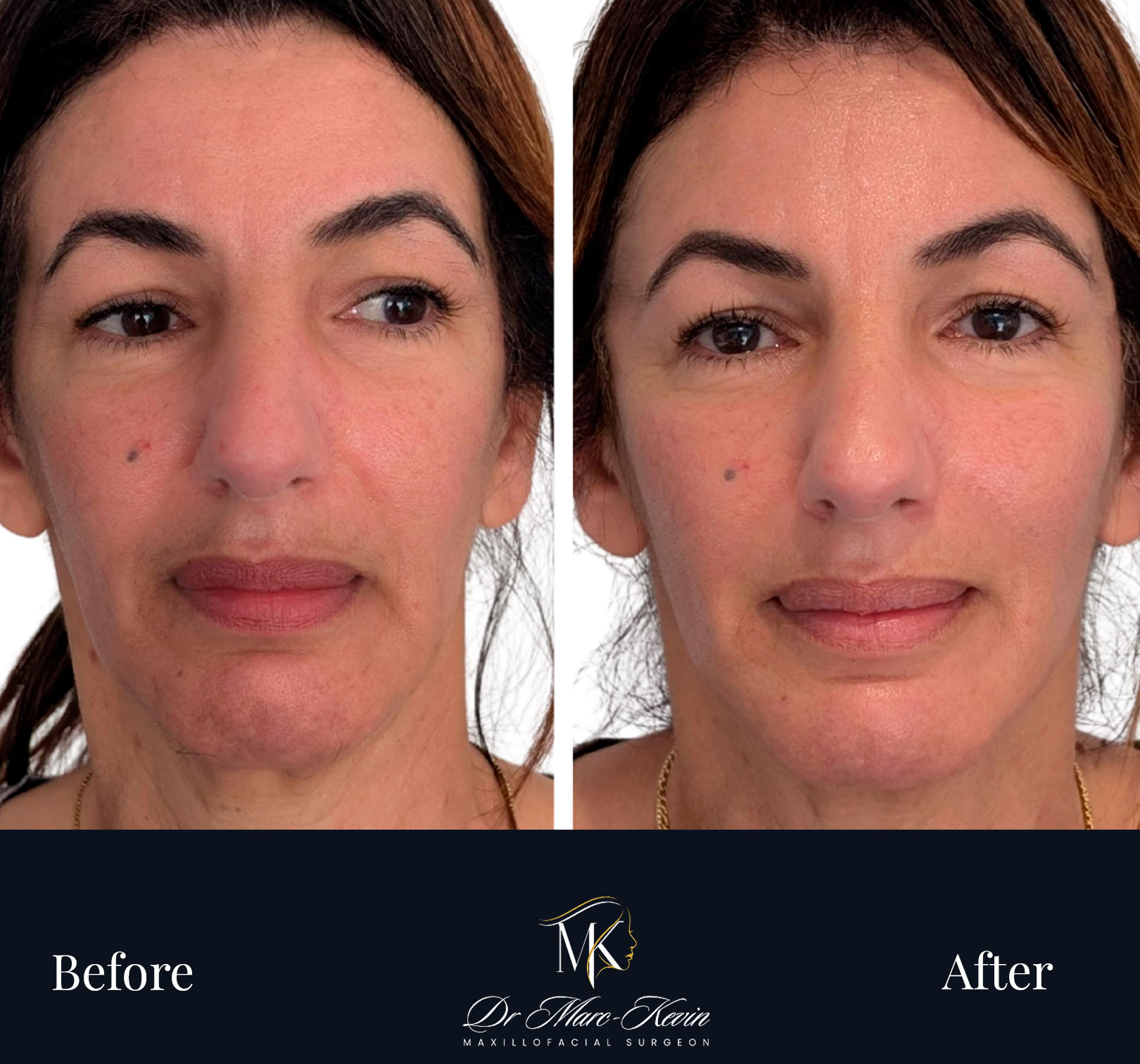
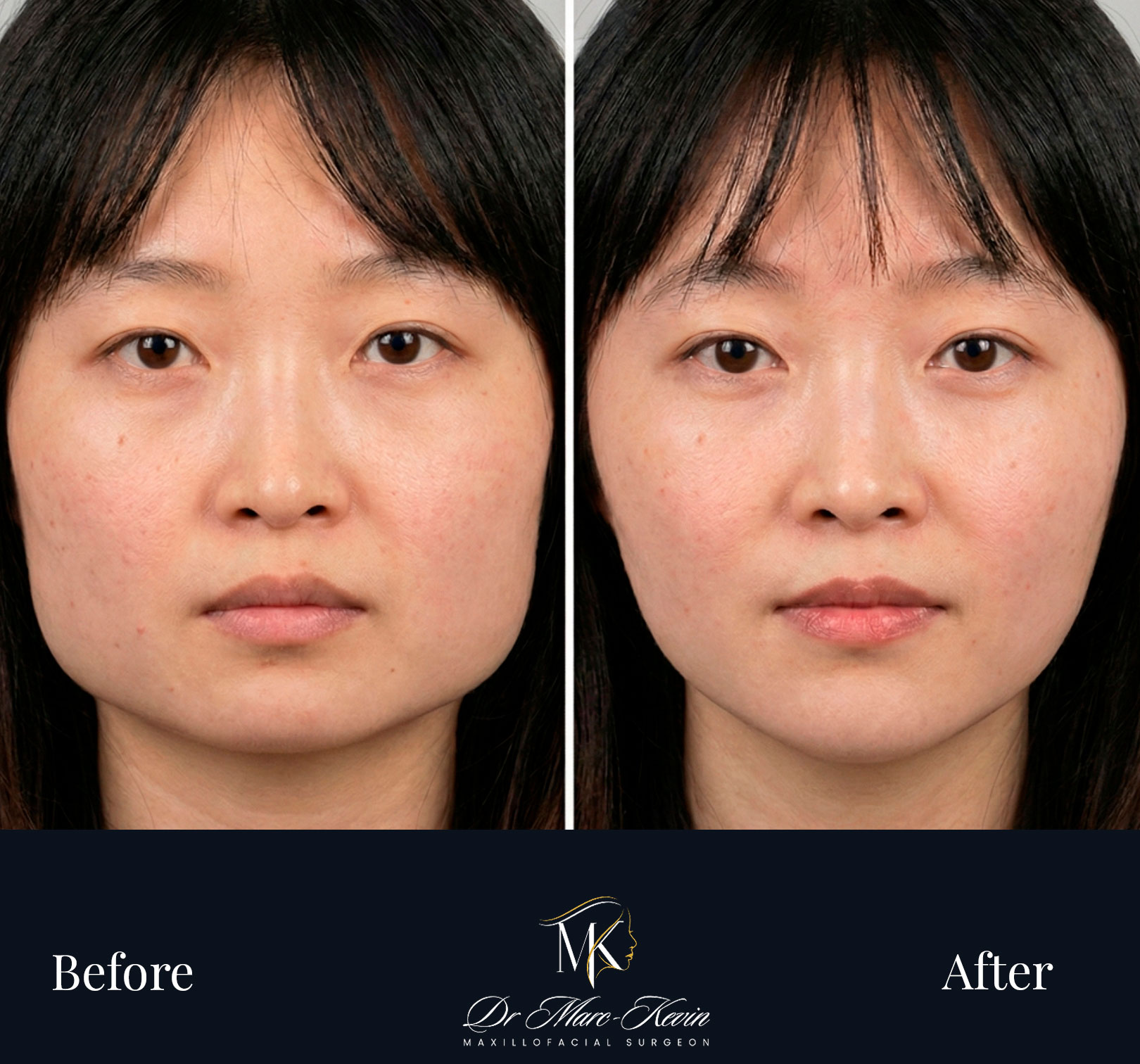
A wide lower face is often caused by an overactive masseter muscle, not just bone or fat. Targeted botulinum toxin can gently debulk the masseter, softening a square jaw and refining facial width—while keeping chewing function comfortable for daily life. Many patients also notice relief from jaw clenching–related tension.
What masseter treatment can (and can’t) do
Helps with:
- Lower-face width from masseter hypertrophy (front & three-quarter views)
- Jaw clenching/tension and bite-related discomfort (symptom relief)
- Asymmetry where one side is bulkier than the other
Doesn’t do:
- Change bone shape or sharpen the mandibular angle (consider Jawline Implant or Chin Surgery)
- Tighten skin laxity or remove submental fat (see Nefertiti Lift / Submental contouring)
- Replace weight management when fullness is mainly fat or skin
Who is a good candidate?
- A square lower face mainly from muscle (not bone or lax skin)
- Clenching/TMJ tension without acute joint pathology
- Realistic goals: refinement and comfort, not an extreme “filter-sharp” jaw
- Non-smoker or willing to pause around treatment
Not ideal if you need major bone change, have uncontrolled TMJ instability, or expect surgical-level tightening from toxin alone.
My planning framework: Masseter Vector Map™
To keep results natural and safe, I assess:
- Muscle bulk & borders at rest and on clench (anterior/posterior/superior zones)
- Parotid duct path, facial nerve course, and smile dynamics (risorius/zygomaticus)
- Bite/occlusion, bruxism history, and any TMJ symptoms
- Adjacent contributors: buccal fat, submental fullness, skin quality, and bony angle
This ensures toxin goes in muscle, avoids diffusion to smile elevators, and matches your goals.
Technique & dosing philosophy
- Botulinum toxin placed intra-muscularly across mapped zones
- Conservative first session, then adjust at review for symmetry and function
- Preserves everyday chewing; short-lived chewing fatigue can occur in week 1–2
Time in clinic: ~20 minutes.
Anaesthesia: none or topical.
Back to routine: immediately.
Aftercare & timeline
- Avoid intense chewing, gum, sauna/steam, and strenuous exercise for 24 hours
- Do not massage the area the first day
Onset: early softening 2–3 weeks
Visible slimming: 6–8 weeks as the muscle atrophies
Duration: typically 4–6 months; with regular maintenance, intervals may lengthen as the muscle deconditions
Safety & potential effects
Common, usually mild: small bruises, tenderness, transient chewing fatigue or smile “pull” changes if toxin spreads (rare with mapping).
Less common: asymmetry, inadequate debulking on very strong muscles (we stage doses), or compensatory bite patterns (monitored and managed). You’ll receive clear consent and aftercare.
Smart combinations (case-by-case)
- Nefertiti Lift for jawline pull-down and avoid jowling in certain Jawtox cases
- Submental contouring if fullness under the chin blunts the angle
- Buccal Fat Removal (selected faces) when deep lower-cheek volume dominates
- Jawline Implant / Chin Surgery when structure—not muscle—is the limiting factor
- Skin quality support (Collagen Stimulators, Boosters, Peels) for better light reflection
FAQs
Will it weaken my chewing?
Everyday eating remains comfortable. You may feel milder bite strength or fatigue early on; most adapt within days.
How soon will my face look slimmer?
You’ll see contour change as the muscle atrophies—most notice it by 6–8 weeks.
Will my smile change?
Mapping stays clear of smile elevators. Minor changes are uncommon and usually temporary.
How often do I need it?
Typically every 4–6 months at first; intervals may extend as the muscle deconditions.
Can it fix jowls or a double chin?
No. That relates to skin/fat and is better addressed with Nefertiti Lift, submental treatments, or surgery.
Results